
The Coin That Shouldn’t Exist
This 1769 Hibernia halfpenny may be the first coin I’ve dug that truly shouldn’t exist.
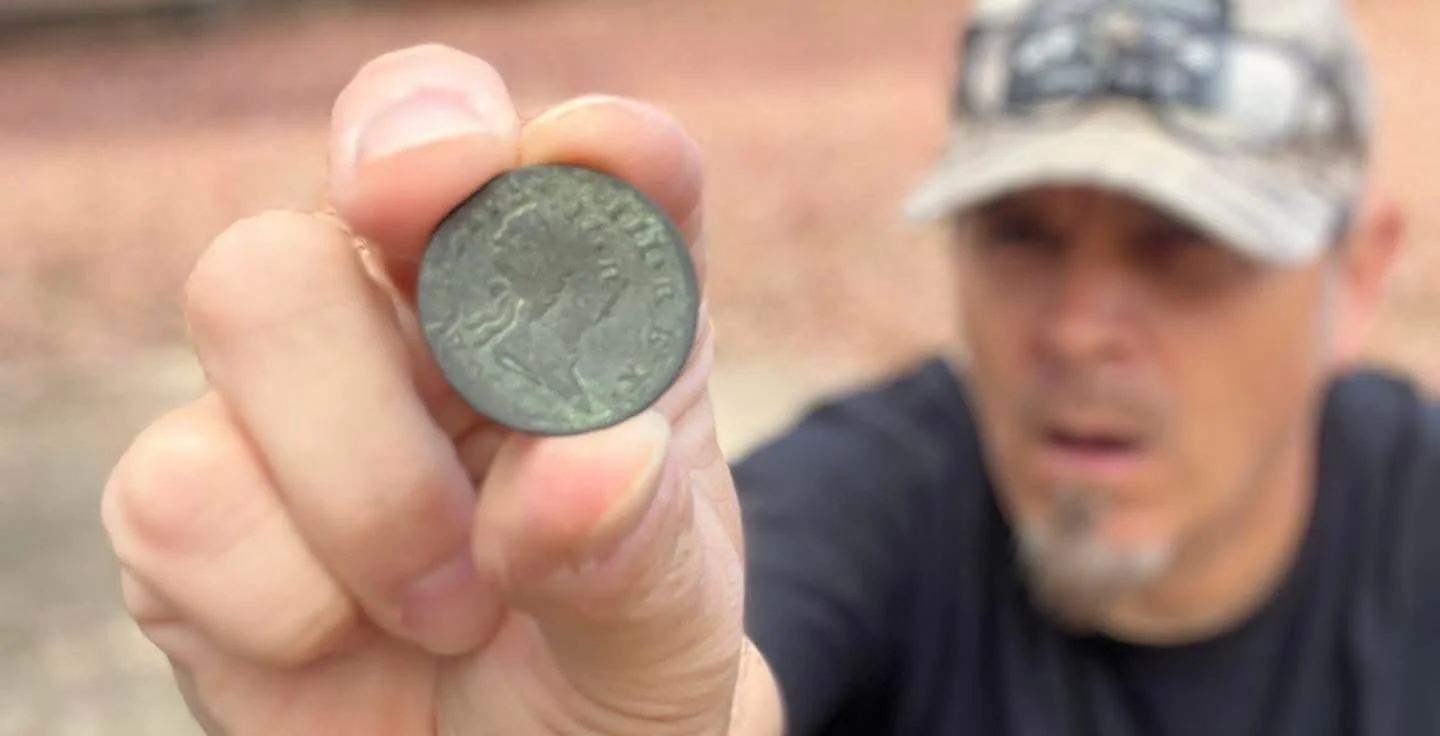
We were metal detecting around a 1700s house in Pennsylvania when a deep, scratchy signal faintly bounced under my coil.
I was using the Nokta Legend, and after hundreds of hours on that machine, I was pretty confident I knew what the signal was telling me. Whatever was down there was either very deep or very small.
I cut about a six-inch plug with my long-handled shovel, swung the detector back over the hole, and the target was still in the ground.
Out came the pinpointer.
I slowly worked my way through the last few inches of dirt with my Lesche, battling tree roots the entire way, until I finally pulled a large copper coin from the bottom of the hole.
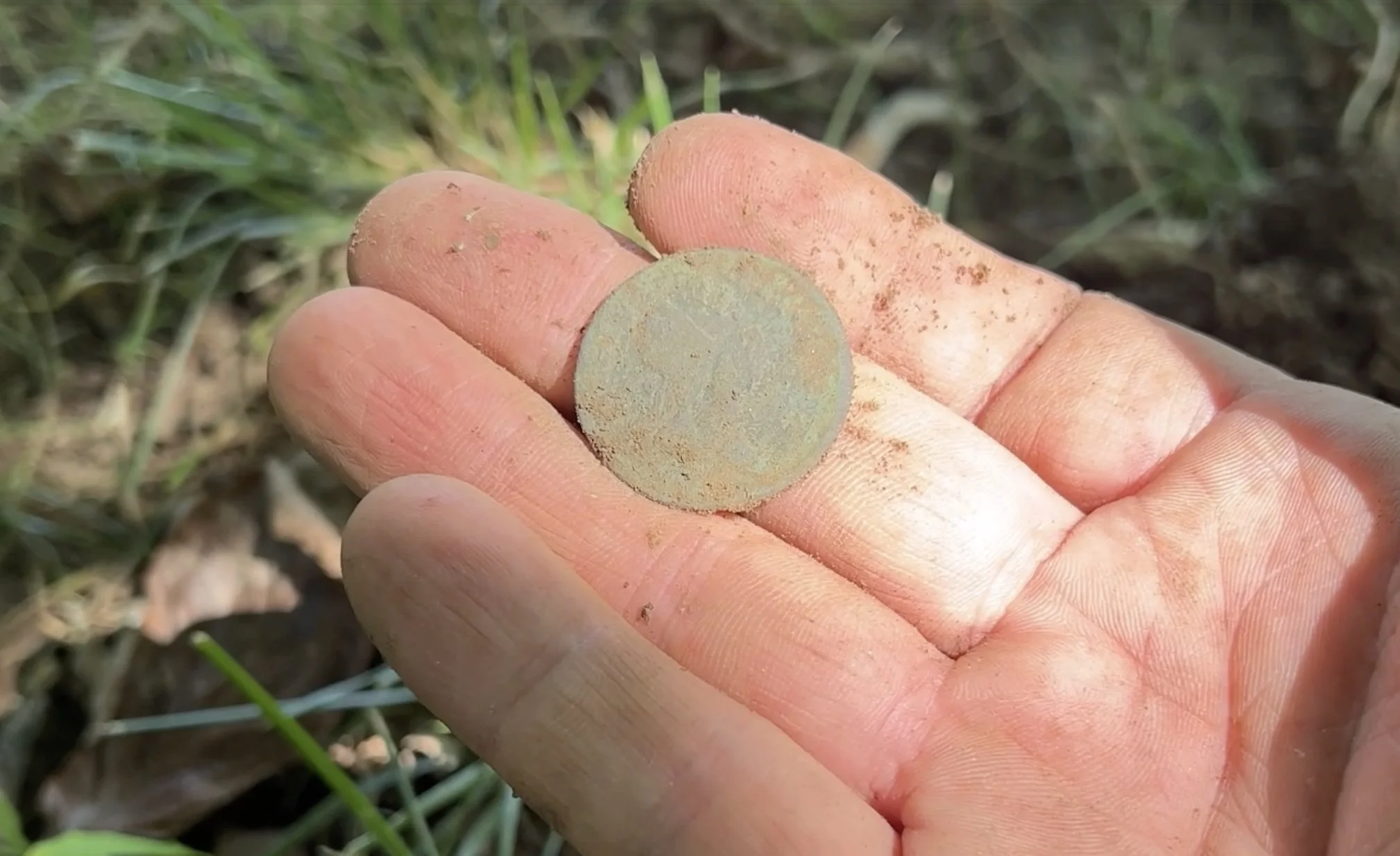
Freshly dug large coin
At first, it looked like the kind of old copper we find from time to time around colonial properties. I knocked away the thick dirt covering the surface and immediately got out my Perun to see if the sidelight could help me identify it.
That’s when things got strange.
I could make out what appeared to be a right-facing bust—but next to it was another right-facing bust.
Two heads?
There are certainly old coins that were intentionally struck with multiple busts, but this clearly wasn’t one of them. Something about this coin was different.
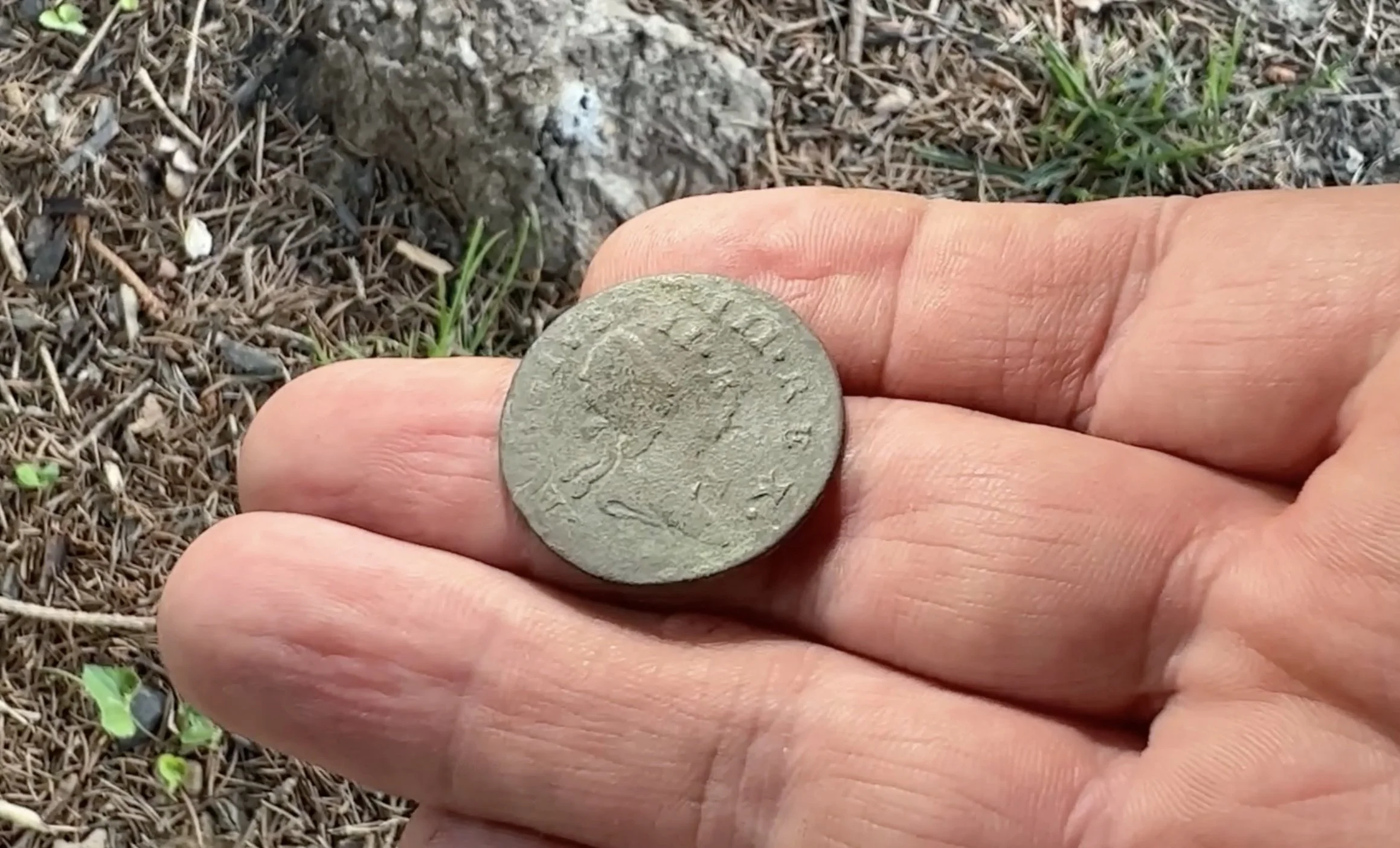
The Two-Headed monster coin
Up to that point, I had been recording the entire dig, but I finally stopped the camera, pulled out some brushes and picks, and carefully started cleaning away enough dirt to unravel the mystery.
Once the details began to emerge under the sidelight, I couldn’t believe what I was looking at.
The coin was a 1769 Hibernia halfpenny—and it had been double struck.
As I slowly shifted the coin beneath the light, two distinct images of King George III became visible, one struck over the other. In fact, nearly the entire right side of the obverse showed a second image.
Then I flipped the coin over and the reverse told the same story.
Two crowns. Two harps. Two dates. Double images running across the design.
This coin had somehow been struck twice at the mint.
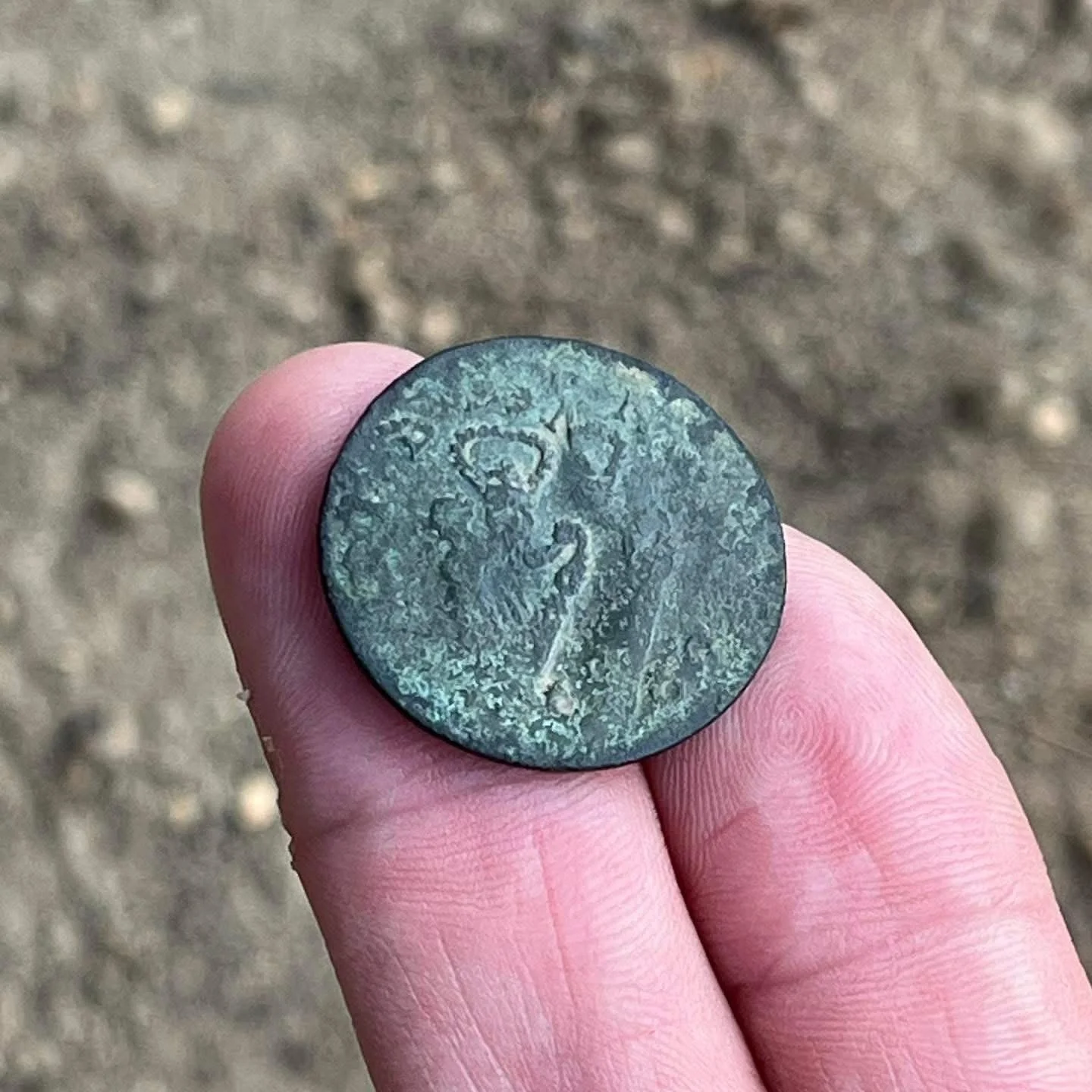
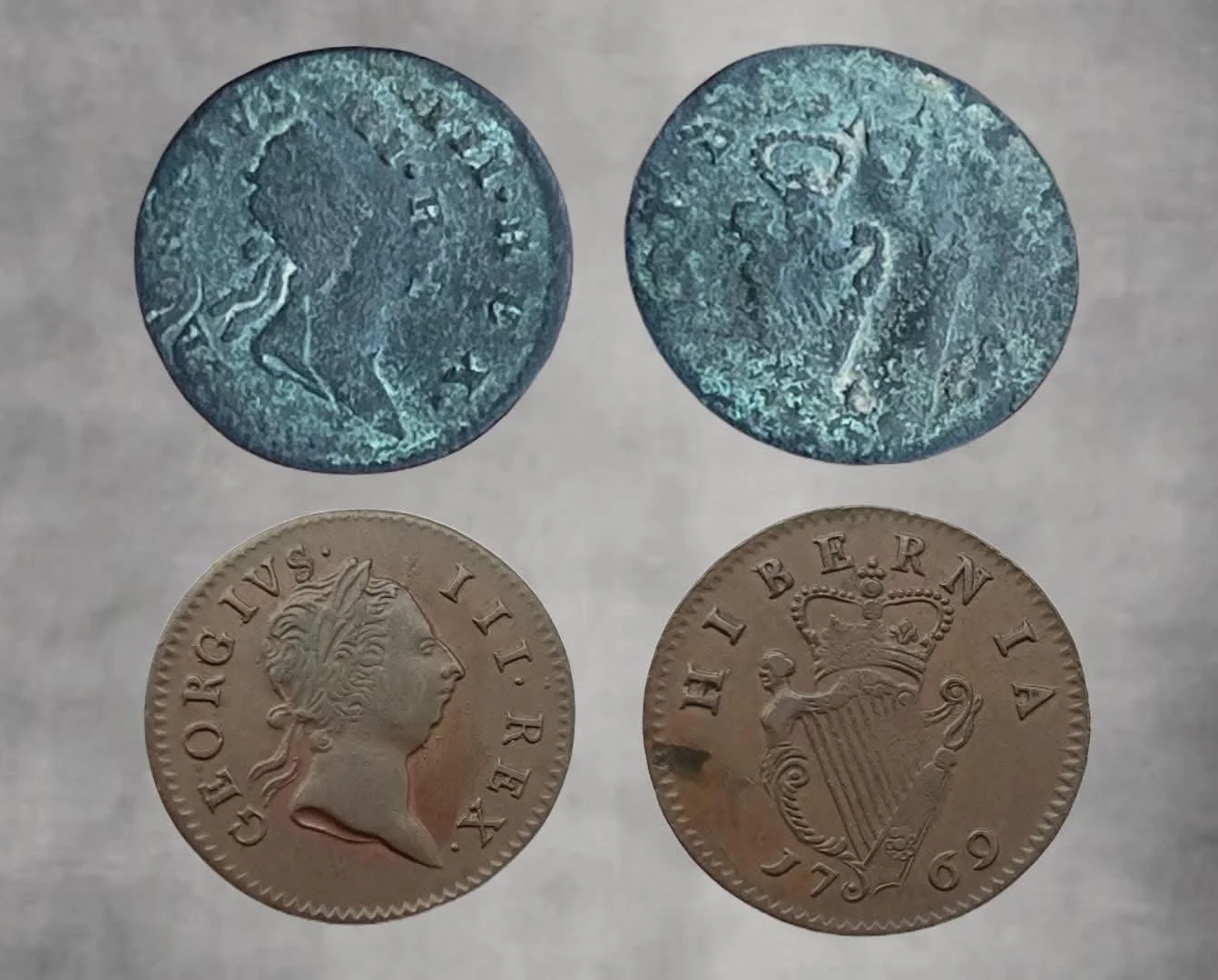
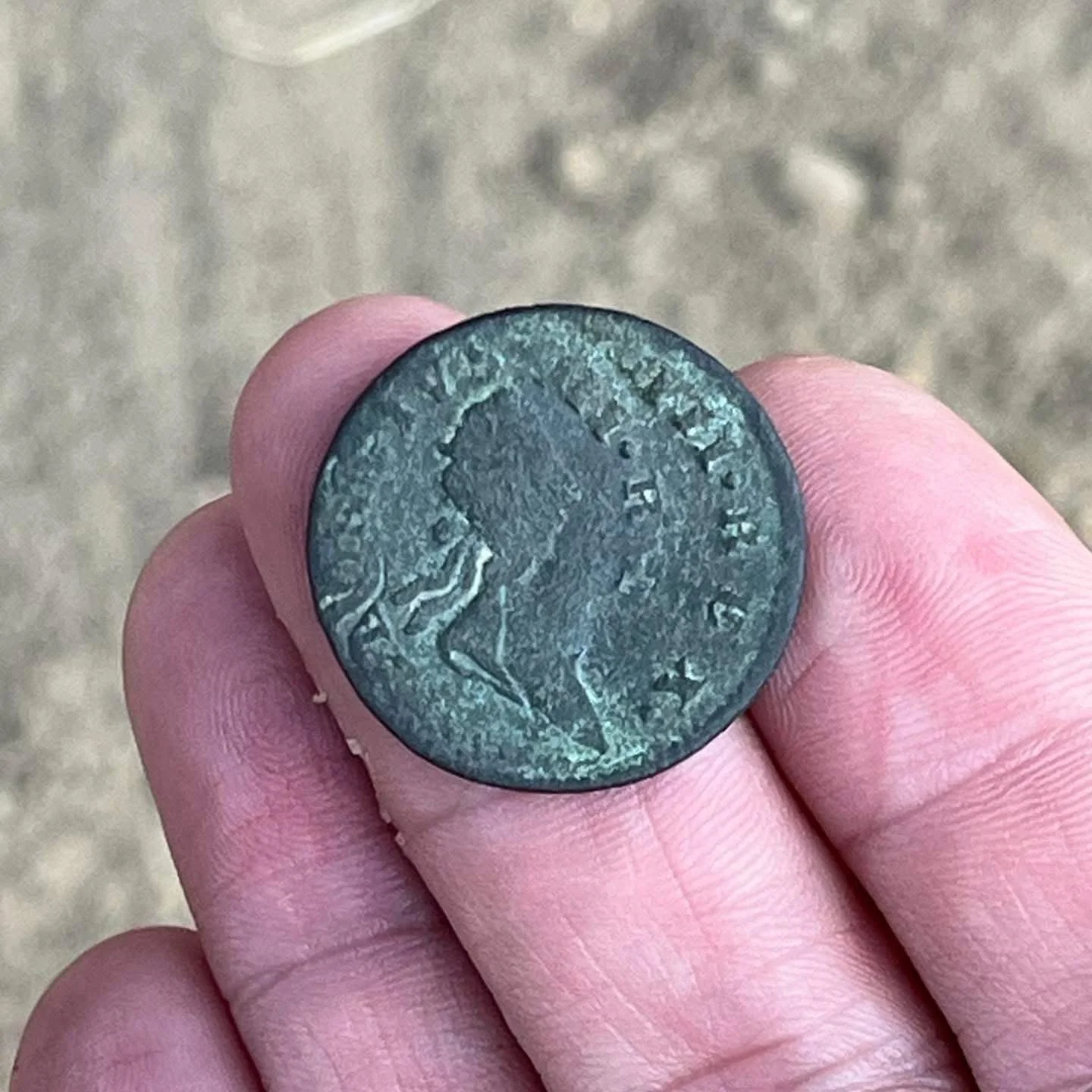
It was a major minting error, even for the 1700s, yet somehow it still escaped into circulation. From there, it eventually made the long journey across the Atlantic to colonial America, changed hands who knows how many times, and was ultimately lost beside this Pennsylvania home—where it remained buried for centuries.
More than 250 years later, my detector passed over it and brought it back into the light.
To this day, it remains one of the strangest and most interesting coins I’ve ever recovered.
And considering how dramatic the double strike is, I sometimes wonder whether another 1769 Hibernia halfpenny quite like this one even exists.
WATCH THE HUNT
Watch the full hunt below, or jump to 4:31 to see this anomoly of a coin come out of the ground.
