
1794 Liberty Cap Large Cent
Some of our best finds have come from places that don’t look very exciting today.
This particular metal detecting hunt took place in the middle of a huge soybean field in Pennsylvania, but over 200 years ago, this area was a well-traveled stagecoach route that passed right through this property. Back in the 1700s, it would have been little more than a dirt road, and about 500 yards from where we were detecting once stood an old tavern.
We had already spent quite a bit of time searching this small section of the old road, and it had been incredibly productive. Large cents, Spanish silver reales, shoe buckles, flat buttons and all kinds of late 1700s and early 1800s coins and relics had come out of this field.
In fact, we had found so much that I had already made three or four different videos from this small stretch of the old stagecoach route.
But there was still something pretty incredible waiting for us.
AN 88 SIGNAL
At the time, I was using my Nokta Makro Anfibio Multi, a top machine in its day that found me a lot of deep treasure over the years.
I got a solid 88 signal that was short and crisp from every direction. It had all the characteristics of a coin signal, so I felt pretty confident there was going to be something round underneath my coil.
What kind of coin was anybody’s guess.
Surprisingly, the signal wasn’t very deep, maybe three or four inches. The field gets worked and rolled every few years, which can move the soil around and sometimes bring deeper targets closer to the surface.
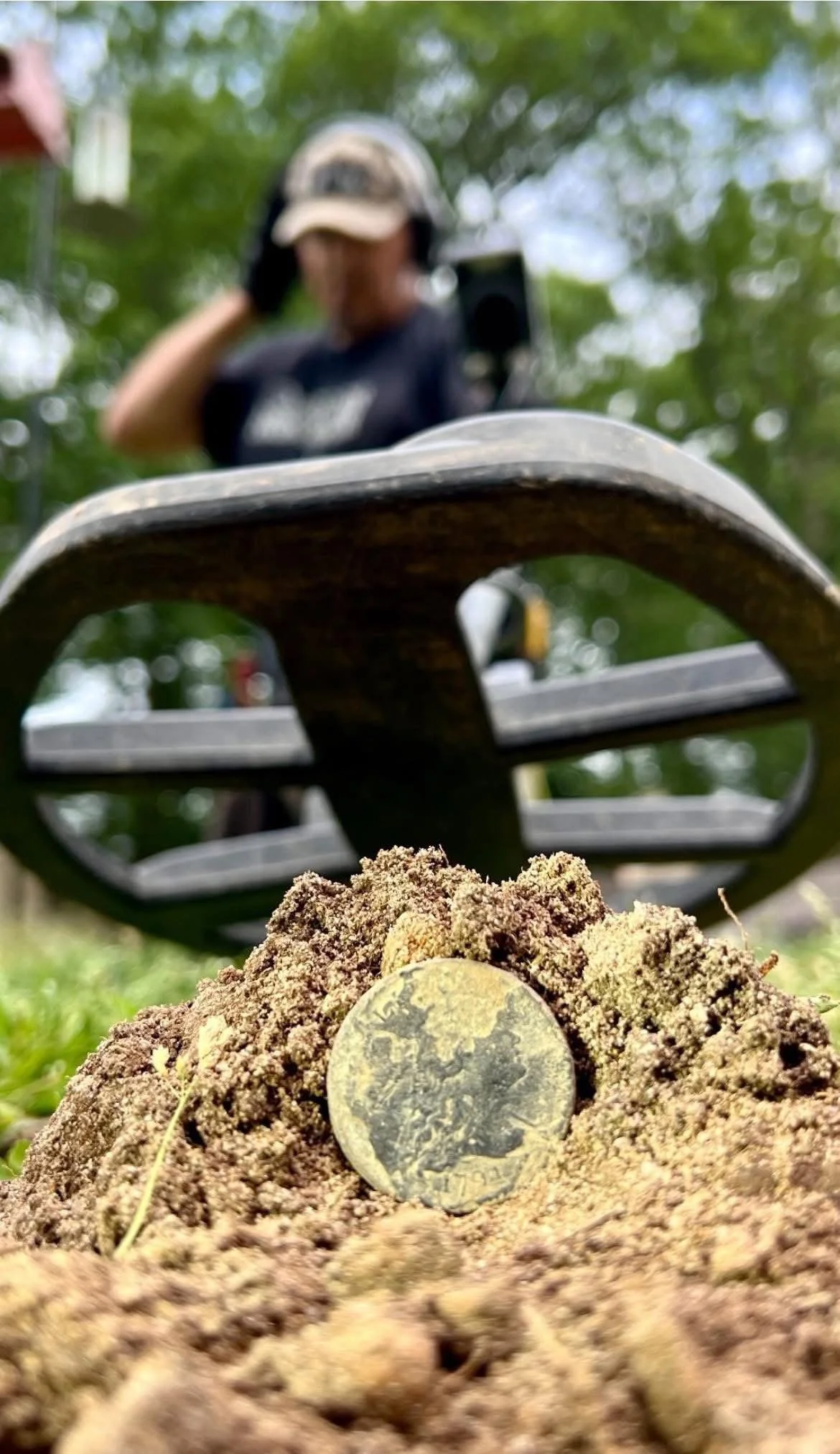
I dug down about four inches, lifted out a mound of dirt and dumped it onto the surface. When I swung the detector over the loose dirt, the signal was still there.
Loud and crisp.
I grabbed my pinpointer and started moving it through the loose dirt until it sounded off.
At almost the exact same moment, my eyes caught something round.
The coin moments after it came out of the ground, still covered in dirt.
It was a large copper coin.
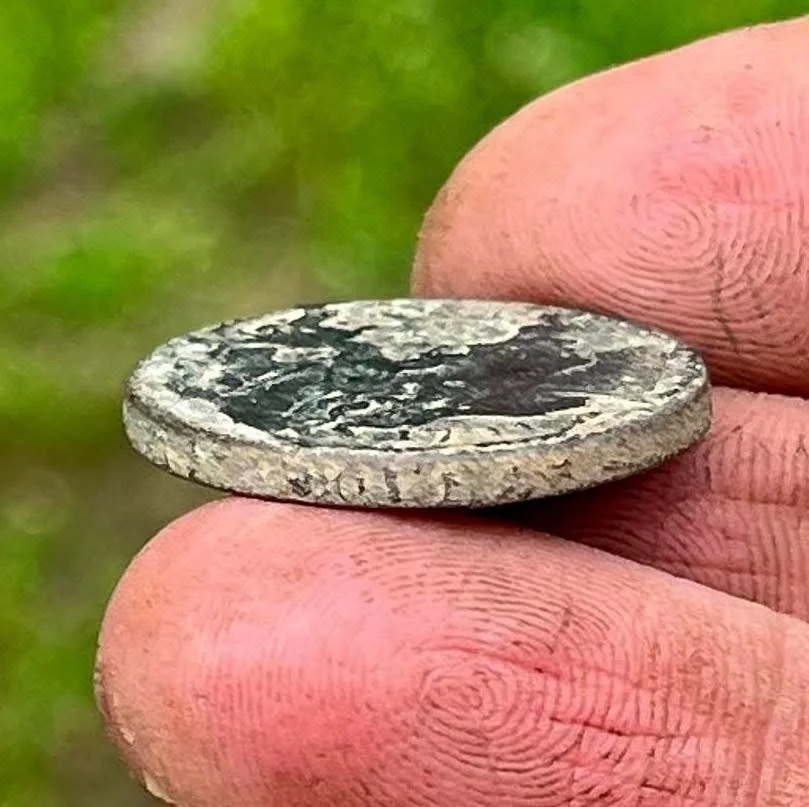
I picked it up and immediately noticed that it felt thicker than most of the copper coins we had been finding there. But it was completely caked in centuries of dirt, so at first I couldn’t see any details.
I slowly started removing the loose dirt stuck to the surface aAnd that’s when the coin began to reveal itself.
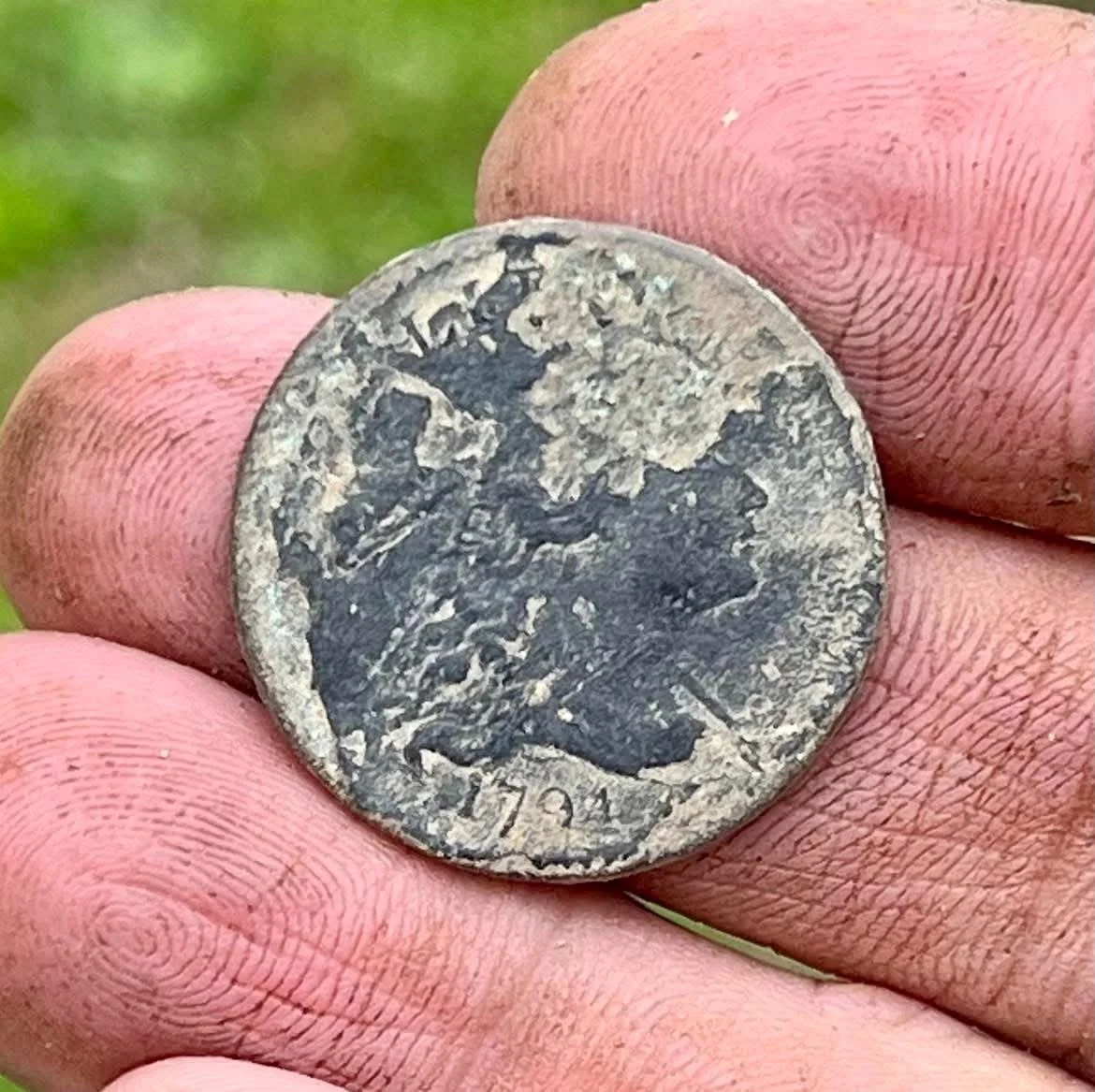
A 1794 LIBERTY CAP LARGE CENT
I could hardly believe the amount of detail that was appearing underneath all that dirt. For a coin that had spent more than two centuries buried beneath an old Pennsylvania stagecoach route, the details were incredible.
The date was clearly visible along the bottom, and Liberty’s portrait still had an incredible amount of detail. Even after all those years in the ground, there was no mistaking what had just come out of that soybean field.
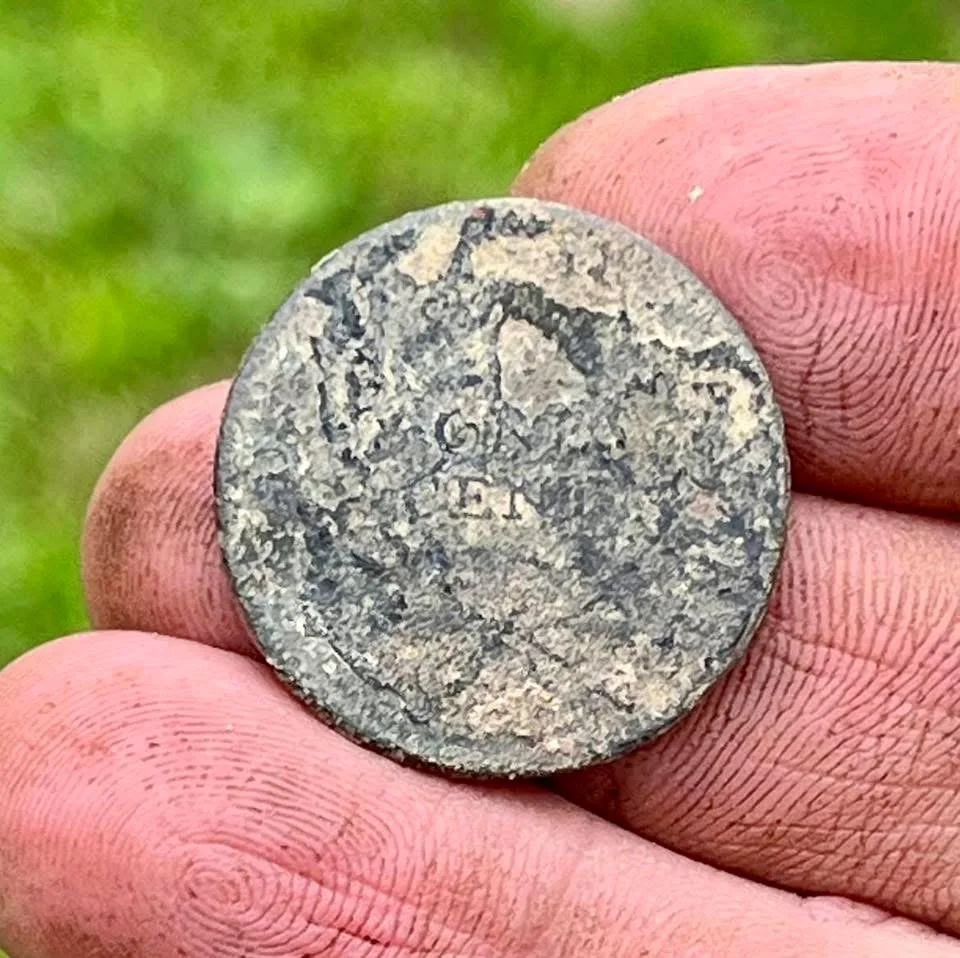
And that thick edge I noticed when I first picked it up suddenly made a lot more sense. These early large cents were heavy, thick copper coins, and they even had lettering around the outside edge. This one reads “ONE HUNDRED FOR A DOLLAR,” meaning 100 of these cents equaled one dollar.
ONE OF AMERICA’S EARLIEST CENTS
The 1794 Liberty Cap Large Cent was struck at the Philadelphia Mint during the earliest years of United States coinage. The U.S. Mint had only begun producing federal coins in 1793, making this coin a product of just the second year of regular U.S. coin production.
These early copper cents were big coins, measuring about 28mm across and originally weighing approximately 13.48 grams, considerably larger and heavier than the pennies we carry today.
More than 230 years later, this one was still sitting beneath an old Pennsylvania stagecoach route, waiting for one more trip to the surface.
WATCH THE HUNT
Watch the full hunt below, or jump to 23:33 to see the 1794 Liberty Cap Large Cent come out of the ground.
