
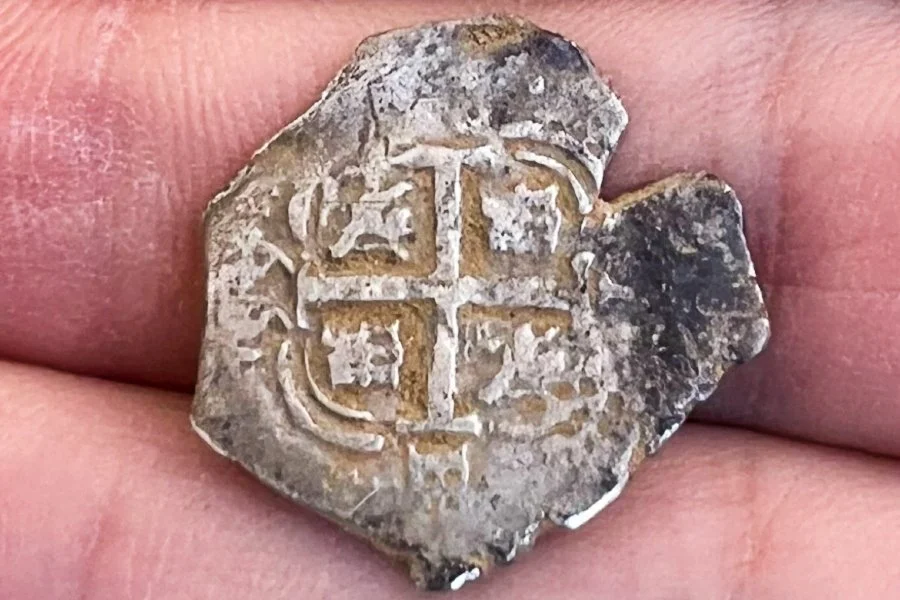
1666 Spanish Silver cob
A 350-year-old piece of Spanish silver found where I never expected it.
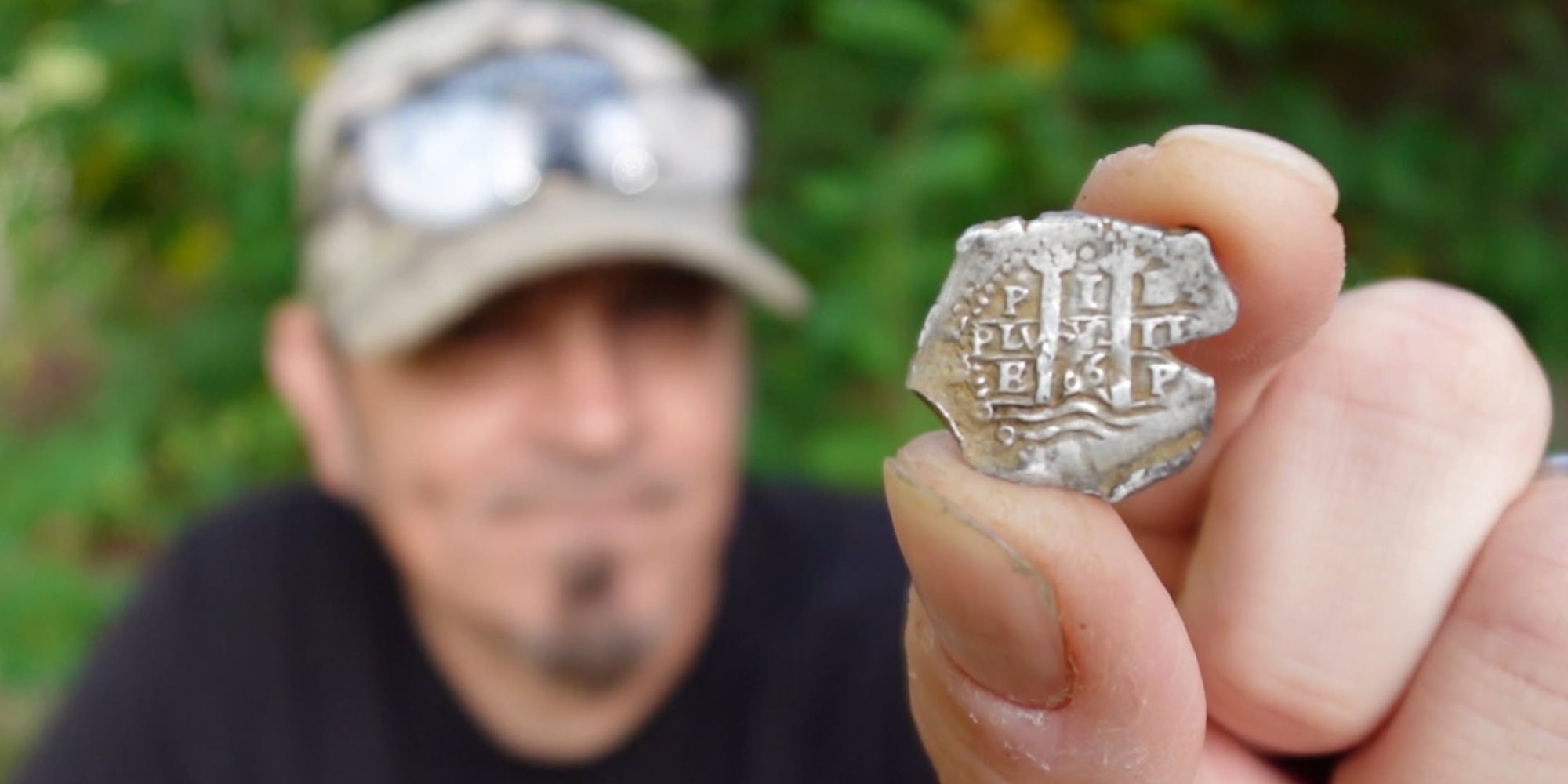
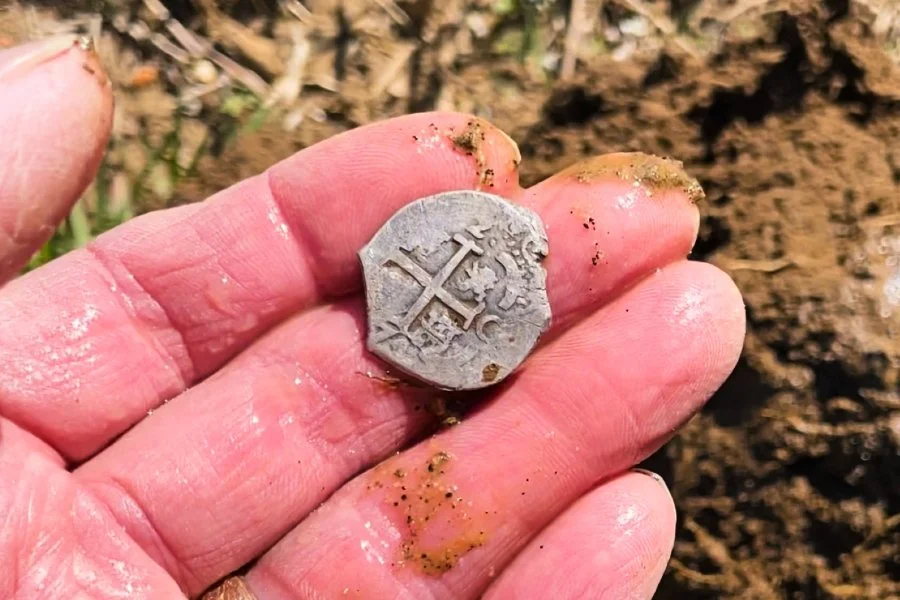
The 1666 Spanish silver cob that started it all.
The Find That Started the “Cob Field”
Sometimes the best places are the ones you almost don’t go to.
Doug had gotten permission for us to metal detect a new farm, and when he talked to the property owner, he was told the farmhouse had been built in the 1940s. Doug passed that information along to the rest of the crew and, since a 1940s property isn’t exactly what we’re usually looking for, most of the group decided to sit this one out.
So that day, it was just me and Doug. But almost as soon as we pulled onto the property, something didn’t seem right. Before we even turned on a metal detector, I started noticing tiny pieces of old broken pottery scattered across the surface of the ground. There were pieces of redware and feather-edge pottery, and immediately I was thinking there was no way the history of this place started in the 1940s.
Then the property owner came out to greet us. While we were talking, the age of the farmhouse came up again and he realized there had been a misunderstanding. He hadn’t meant 1940.
He meant 1840.
Well, that changed things.
Between the corrected date on the farmhouse and the old pottery already laying on top of the ground, Doug and I were suddenly a lot more excited about what might be underneath it.
This Place Was Much Older Than We Thought
Once we started metal detecting, it didn’t take long to realize that even 1840 wasn’t telling the whole story. We started finding flat buttons, large cents, half cents and all kinds of other early American pieces.
Then the finds started getting older.
A lot older.
William and Mary halfpennies from the late 1600s started coming out of the field. Charles II halfpennies from the 1670s. One-piece pewter buttons dating back to the 1600s.
At that point it was obvious there had been people using this land long before the existing farmhouse was ever built.
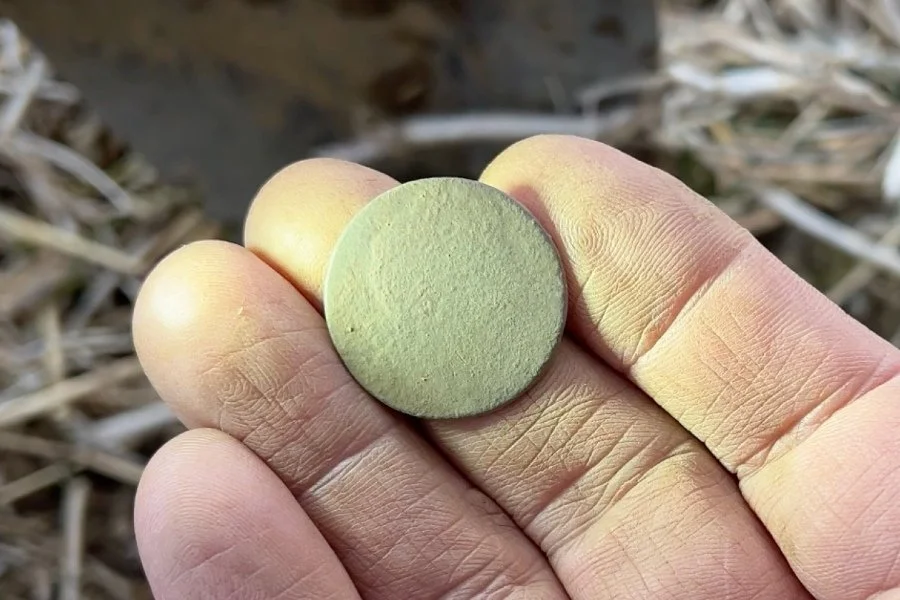
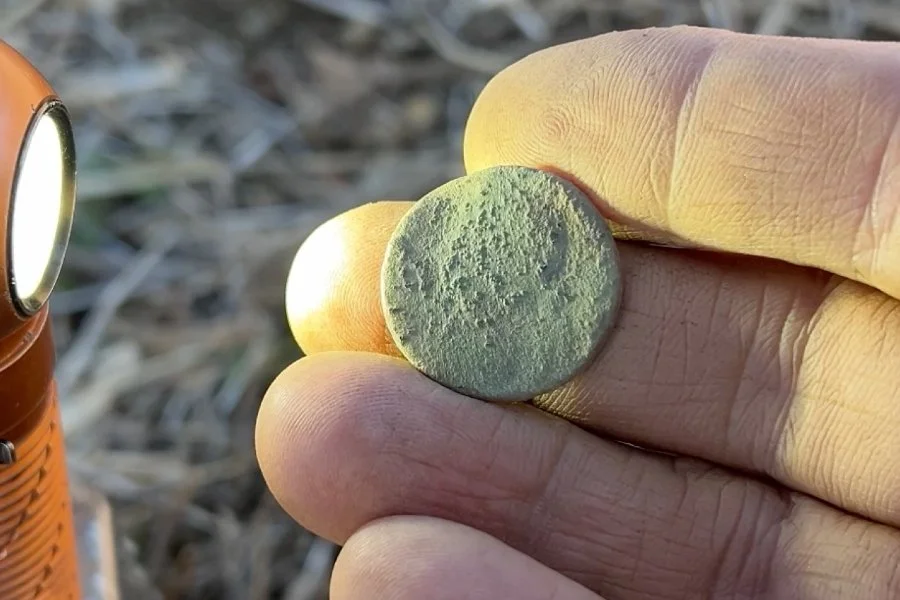
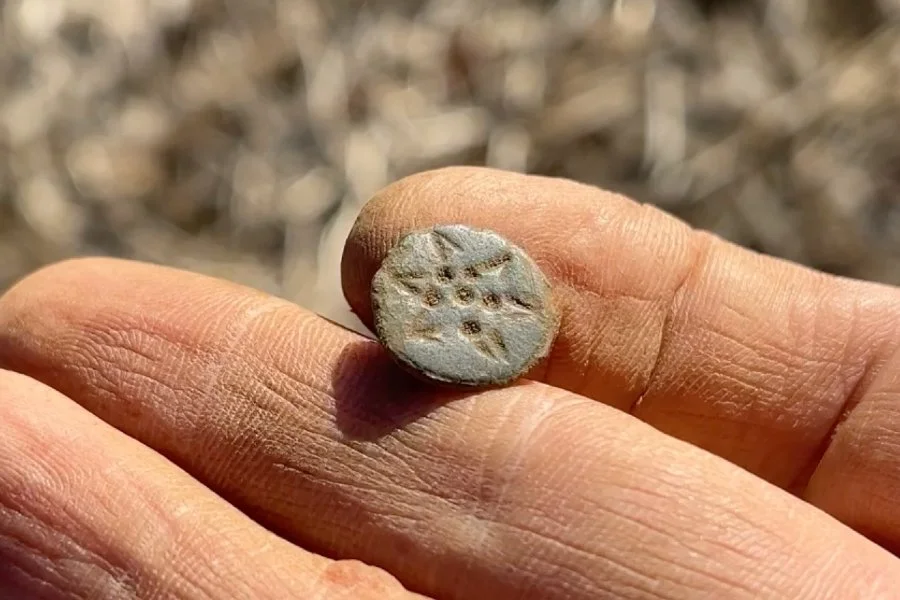
And then I got a signal I can still remember like it happened yesterday.
A Perfect 32
I was using my Nokta Legend when I got a mid-tone signal that came up as exactly a 32 ID. I remember that number because of what happened next.
At the time, I really wasn’t expecting anything crazy. With all the buttons we had already been finding, I thought there was a pretty good chance I had another one.
I cross-checked the target from a couple directions so I knew exactly where it was and wouldn’t hit it with my shovel. Then I dug down and popped the dirt out.
I could see something partially round sitting there, but it was still covered in dirt and I couldn’t make out exactly what it was. The shape was strange. It wasn’t perfectly round at all.
My first thought was actually that I had found some kind of smashed or crumpled cap.
Then I picked it up.
There were raised letters showing through the dirt, so I gave it just a very light rub with my finger.
And a cross appeared.
At that moment, I knew exactly what I was holding.
A hammered Spanish silver cob.
And not just any old coin.
This was a 1666 Spanish silver cob minted in Lima, Peru, the oldest coin I had ever found on U.S. soil.
After spending years metal detecting old properties looking for pieces of early American history, I was standing in the middle of a farm field holding a hand-hammered piece of Spanish silver that was more than 350 years old.
The 1666 Spanish silver cob moments after it came out of the ground.
Real Old World treasure.
A Coin Made by Hand
Part of what makes Spanish cobs so fascinating is the way they were made.
These weren’t perfectly round coins coming off a modern coin press. Pieces of silver were prepared individually and the designs were hammered into them by hand. That’s why cobs can have such strange shapes. Some are rounder than others, some are irregular, some have parts of the design missing and some have beautiful sections of the original strike still showing.
In a way, every one is different. I always think of them almost like silver snowflakes.
And this particular piece of silver had already had one incredible journey long before I ever came along with a metal detector.
It had been struck in Lima, Peru during the Spanish colonial period, traveled through a huge network that moved Spanish silver around the world, and somehow eventually made its way to North America.
Exactly how this particular coin ended up in that field is something we’ll probably never know.
Was it lost by an early settler? Did it change hands through trade? Was someone carrying it along the nearby waterway?
There are a lot of possibilities. What we do know is that at some point more than three centuries ago, somebody lost it.
And there it stayed until that 32 signal brought it back to the surface.
Suddenly Everyone Wanted to Hunt the “1940s Farm”
Needless to say, when the rest of the crew heard about everything Doug and I had found that day, that farm suddenly sounded a whole lot more interesting.
We went back.
Then we went back again.
And again.
Over the years we have probably hunted that property more than 25 times, and what has come out of that ground is incredible.
We’ve recovered more than 50 copper coins, including 22 coins dating to the 1600s, along with more than 300 buttons, shoe buckles, knee buckles, hand-forged iron and all kinds of other early pieces.
And that first Spanish cob wasn’t the last.
We eventually found three more hammered silver coins there!
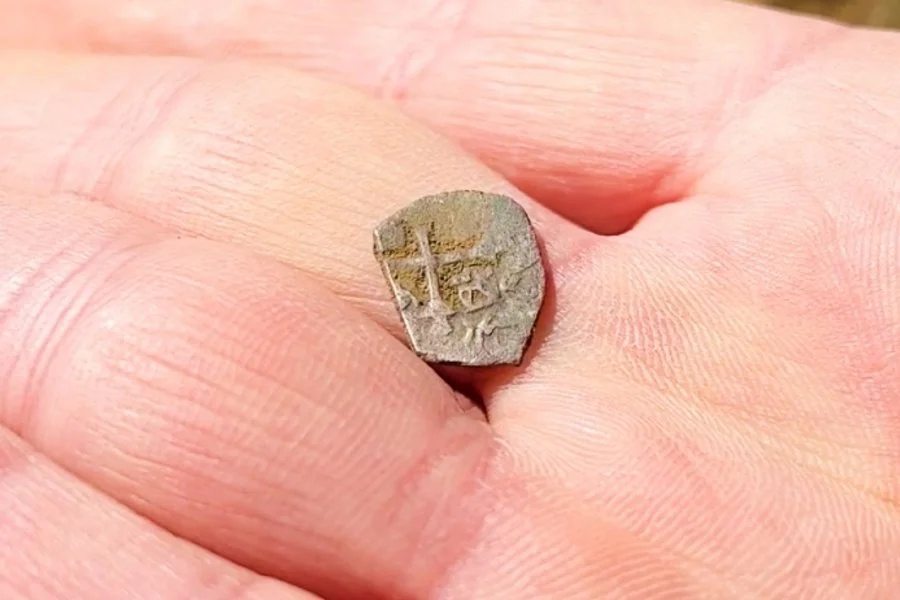
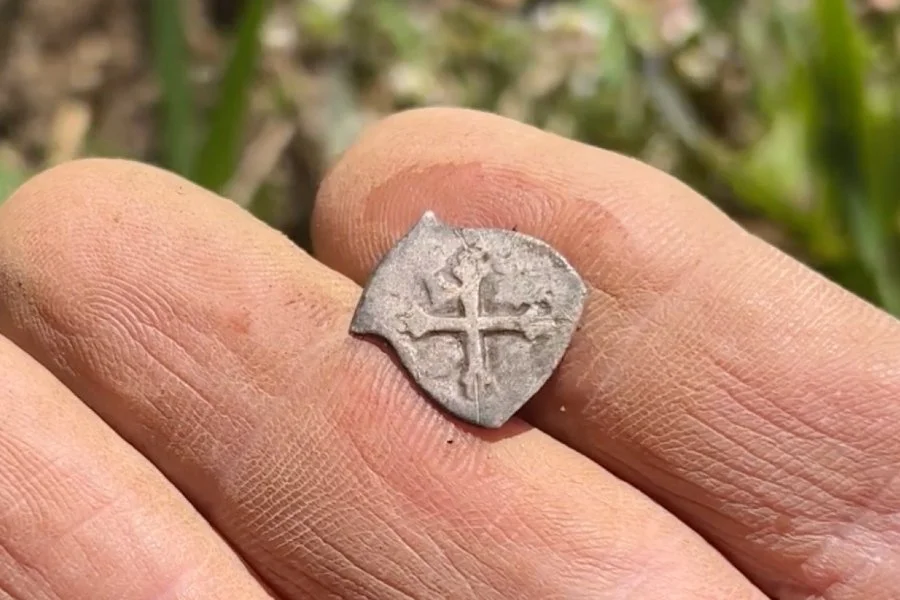
What started as a farm that most of the crew skipped because we thought the house was built in 1940 turned into one of the oldest and most productive places we’ve ever metal detected.
What Was Here Before the Farmhouse?
The more we found, the more questions we had.
Even though the existing farmhouse dates to the 1840s, there was clearly a tremendous amount of activity on this property well before that. The farm borders a narrow waterway on one side, which makes the location even more interesting. Based on the age and amount of material we have recovered, we’ve wondered whether some kind of early trading location, stopping point or other activity may have existed here long before the present farmhouse.
We may never know exactly what was happening on this piece of ground more than 300 years ago. That mystery is part of what keeps us coming back.
Every winter, when the crops come down and the field opens back up, we return with our detectors and see what else the ground is willing to give up. And somehow, even after all those trips, it continues to surprise us.
The property has also picked up a nickname along the way.We don't really call it by its actual name anymore.
To us, it will always be...
The Cob Field.
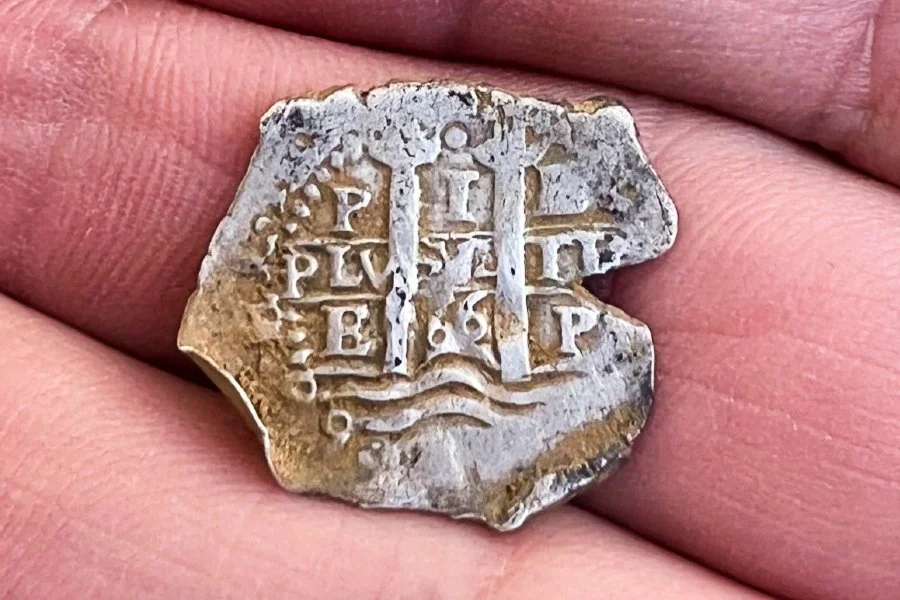
Watch The Hunt
Watch the hunt where the 1666 Spanish silver cob came out of the ground.
